

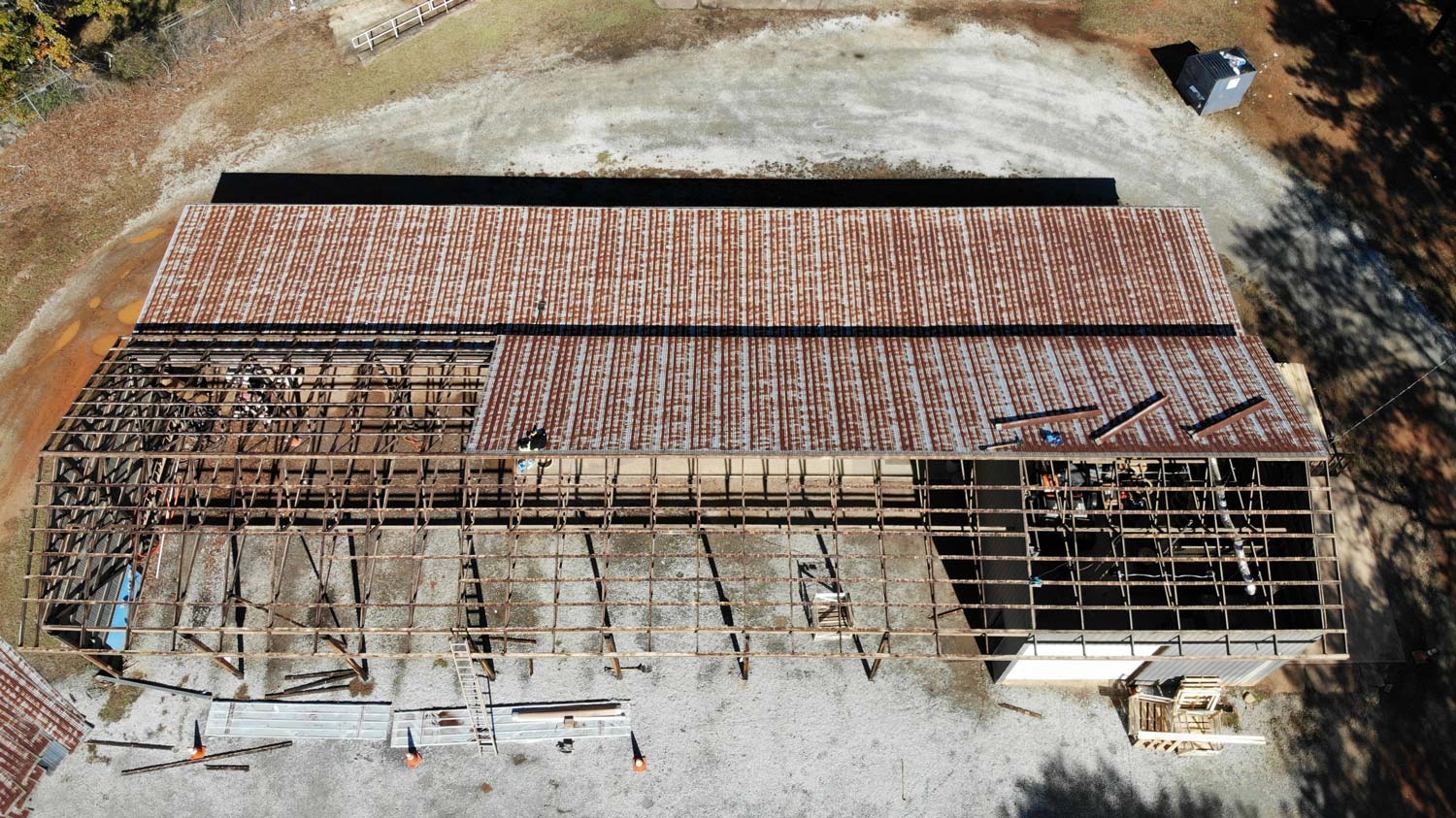
Asphalt Shingles
Asphalt shingles are among the commonly used residential roofing materials. Most people prefer asphalt shingle roofing for their homes because they are affordable, easy to install, and readily accessible. Additionally, asphalt shingle roofing requires minimal maintenance, and it can effectively protect a home against weather elements.
Types of asphalt shingle roofing
There are 3 main types of asphalt shingle roofing in the market today. Check them out below:
3-tab shingles
3-tab asphalt shingle roofing contains 3 tabs on each of the shingle strips, hence the name. The shingle roofing is made from a layer of asphalt, cut into various strips. 3-tab asphalt single roofing is flat, giving the roof a slanted look. The 3-tab shingle roofing is also known as asphalt strip shingles.
Dimensional shingles
Dimensional shingles are the most common asphalt shingle roofing. The roofing is also called laminate or architectural shingles. During the manufacturing process, dimensional shingles are added with two or more layers to produce a multidimensional thick appearance. According to the ARMA (asphalt roofing manufacturers association), dimensional shingles are among the most popular shingle roofing today.
Luxury shingles
Just as the name suggests, luxury shingles are the highest quality of asphalt shingle roofing. Luxury shingles are laminated to provide the home with maximum weather protection while adding aesthetic appeal to the property. If you are looking for asphalt shingle roofing that provides an accurate interpretation of slate or wood shake roofing, then luxury shingle roofing is the way to go.

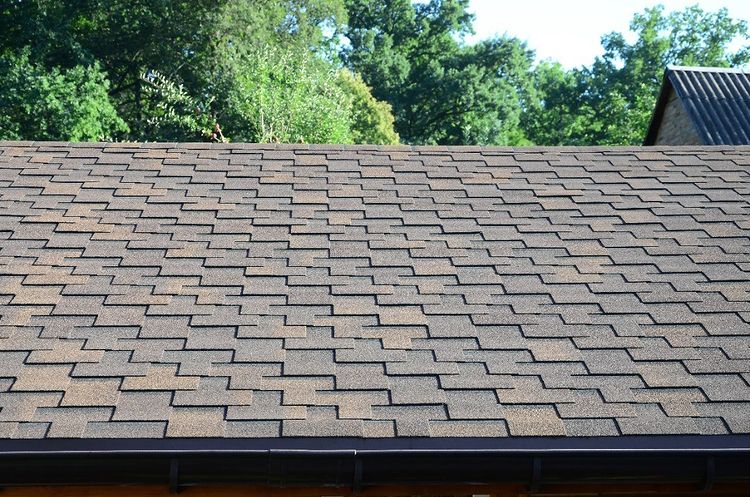
How Often Does a Roof Need to Be Replaced?
How Often Does a Roof Need to Be Replaced?
Are you wondering how often you should replace your roof? If yes, wonder no more. This simple guide will help you know when to replace a roof and when to repair it.
How often should you replace a roof?
The material and the condition of the roof are the two most important factors to consider. There are other factors such as storm and snow damage, but these two are by far the most important. This is because snow and storm damage tend to affect older and run-down roofs more than those that are in good condition.
The roofing material
Typically, every material has a replacement period. When putting up a new roof, your manufacturer’s warranty includes maintenance schedules, warranty period, and the expected lifespan of the material. Asphalt shingles are not all made the same. Some will last just 10 years while others will be good for three decades. Metal roofs will generally last longer, and you may not replace them in your lifetime (or generally 50 years). Some, such as slate will last well over a century.
The age of the roof will guide you on how soon you can expect to change it. If you have a composition shingle roofing in its 8th year, you will need a new roof soon, preferably in the next 3-4 years. If you have a 15-year-old steel roof, you probably have another decade. If you have bought a house and you are wondering how often you will need a new roof, use the installation paperwork.
The condition of the roof
Irrespective of the material used, the condition of the roof will play a significant role in how often you need a new roof. If there are visible signs of water damage, holes in the roof, stains in the ceiling, sagging, evidence of mold, missing shingles, damaged flashing, or multiple instances of curling and buckling shingles, your roof probably needs to change.
Of course, you don't have to as how often to replace a roof if you have experienced storm damage, tree damage, or snow damage.
For all your roof replacement and installation needs, contact Universal Roofing.
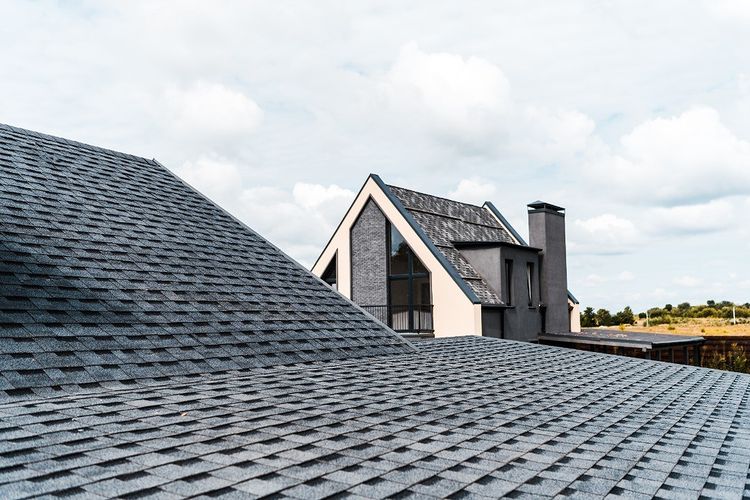
How Long Does A Shingle Roof Last?
Part of your return on investment when installing or replacing your roof lies in the lifespan of the roof. To many homeowners, it means they receive uncompromised home protection for as many years as possible.
It is imperative to know how long you can expect the shingle roof to last. Typically, the average life of a shingle roof is 22 years, but it may go as high as 30 years.
The actual shingle roof lifespan varies based on several factors, such as your home environment and the type of roofing material used. Take, for instance, a popular roof shingle like the asphalt shingle.
What is the average asphalt roof lifespan?
Asphalt roof shingles are the most popular among many homeowners because they are extremely durable, affordable, and always come with great warranties. They can vary from dimensional, 3-tab, and luxury asphalt shingles.
So, how long does an asphalt roof last? With the correct installation and drainage, the shingle roof life of 3-tab shingles may range from 20 to 22 years and 25 to 28 years for dimensional shingles. Generally, these shingles come with a manufacturer warranty of between 25 and 30 years.
What affects your shingle roof life?
Shingle roof lifespan may vary based on these factors:
- Installation workmanship: if you work with an inexperienced roofer, it inevitably leads to poor work, which shortens your roof’s lifespan. You will constantly dwell on repairs, accelerating your roof’s aging.
- Quality of roof materials used: low-quality materials may be cheaper initially but a lot costlier due to frequent replacements. In the end, you may have to replace the entire roof.
- Environmental conditions: if your home is always exposed to strong winds, extreme temperatures, or falling debris, your roof will take a harsher beating. It may not survive that for long.
- Type of roofing material used: whether you have installed metal roofing, asphalt shingles, wood shakes, clay tiles, or slate tiles, their durability greatly varies. This ultimately affects their lifespan under different conditions.
Are you looking for industry-leading workmanship for all your roofing needs? Universal Roofing is your best bet. We take your roofing dreams to heart and turn them into a permanent reality. Ready to get started? Get in touch today!
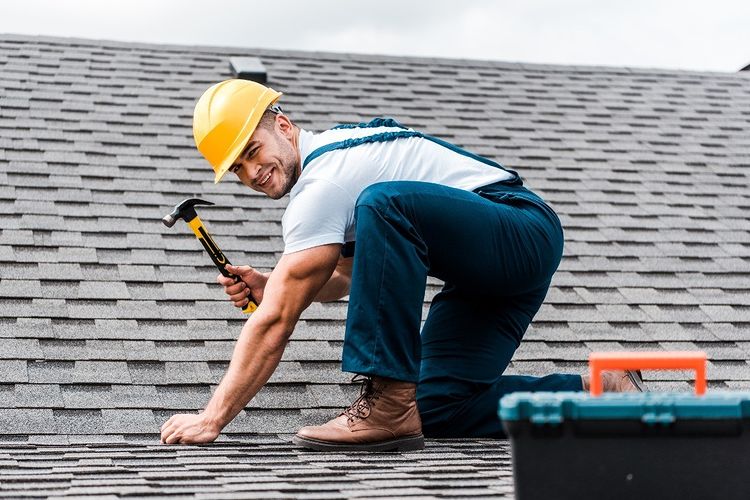
What Is Slate Roof?
Making a roof upgrade or replacement decision is a huge investment. You want to make sure you select a roofing material that returns the best value for your money. What roof aesthetics are you after? How much is your budget?
If you desire elegantly looking roof materials and extreme luxury, slate roof tiles are an excellent choice. However, that comes at an extra price. So, what exactly is a slate roof, and what makes it stand out?
What is a slate roof made of?
A slate roof is a form of stone roofing crafted from natural hard slate tiles. Once mined, the slate is cut into square tiles, and that is how it ends up on your roof.
Slate comes from naturally occurring hard stone. Therefore, slate roofs do not absorb water or warp due to moisture damage. They are also resistant to fire.
Furthermore, slate can uncompromisingly maintain its luster for decades, making it a reliable roofing solution in modern homes. Slate roof shingles are heavily praised for their beauty, longevity, and durability.
However, because of the weight and small size of the slate roof tiles, they can only be installed one at a time. That translates to a lengthy roof replacement process. Even so, once installed, you will shelf your roof damage concerns for a good number of decades. Some slate roofs from the Reconstruction Era are still in decent shape 300 years later.
So, is slate the correct roofing material for you?
There are a few considerations you must make to answer this question right, including:
- Slate roof tiles are heavy, and your roof deck must have reinforcements to bear the weight. You must determine if your house can withstand all that weight by consulting an expert.
- Slate roof tiles are expensive because of their production process and shipping. These processes translate to huge installation costs as well.
- Finally, not very many roofers are familiar with the installation of slate roofs. So, you must carefully select your roofing team for the best durable outcomes.
Ready to team up with a roofing team that takes a universal approach in all your roof-related concerns? Universal Roofing fits the description.
Our universal perspective ensures we cover every inch of your roof with the precision it deserves. Talk to us for a free roof inspection.
How to Find a Top-Rated Roofing Contractors Near Me?
“How do I find a top-rated roofing contractor near me?” If you've asked yourself that question and don't know where to look, let us help. Finding a top-rated roofing contractor who you can trust will save you time, money and give you peace of mind that you and your family are protected. These 6 simple tips will let you finding a top-rated roofing contractor in no time!
Contractors must have four important credentials.
First and foremost, a top-rated roofing contractor will have these extremely important credentials, license, bonding, insurance and workers compensation. Let’s take a look at what these four credentials are:
License
When looking for the "top-rated roofing contractors near me," you must first ask if the contractor has a state license. Every roofing contractor should have a LOCAL license and permit to complete a roofing project. Ask to see the roofing contractor's license before signing a contract. You can also call the Department of Business and Professional Regulation (404) 424-9966 and ask them to verify a contractor’s license or visit https://georgia.licensesearch.org/contractor/.
Insurance
Reputable roofing contractors will also carry insurance for all of their employees, including workman's compensation. Roofing is a dangerous job. Top-rated roofing contractors will have both worker's compensation and general liability insurance. Should something happen to the contractor's employees while working on your roof, you do not want to be liable for injuries or accidents that may occur on your property, by being insured your contractor assumes liability for employees.
Bonded
When a contractor is bonded, a bonding company retains money for a consumer to file a claim against that company.
Any reputable roofing contractor will provide proof of license, bonding, insurance and workers' compensation. Be sure that these credentials are local to where the work will be performed. A top-rated roofing contractor must have a local license, insurance, bonding and workers’ compensation. If your contractor cannot provide these items start your search again and find a contractor who can.
Check references
Anytime you ask yourself, “How do I find a top-rated roofing contractor near me?” ask the contractor to provide references. Talking with people who have worked with a top-rated contractor will solidify your decision to choose that company. Reputable contractors will be more than willing to let you speak with previous customers who can vouch for their work. Ask questions such as:
Was the roofing contract company professional?
Did they show up when they said they would?
Were they respectful of your property?
Did they clean up and remove debris?
Check online reviews
By checking online reviews, you will get honest feedback about your roofing contractor. Both happy and unhappy customers will often provide insight from their experience with the contractor. There may be things you didn't think of that come up from reading these reviews and this will give you a more in-depth look into your local roofing contractor.
Free estimate
A top-rated roofing contractor will provide you with a free estimate on your project. It’s important to have a budget that you are working with, and the best roofing contractors will be cognizant of that budget. With that being said, sometimes unforeseen issues can arise once the contractor begins work on a roof replacement or repair. These issues may not be detected until work has already started and shingles are taken off. It is essential to ask your contractor how these issues will be handled and the potential cost.
Get more than one quote.
When asking, “How do I find a top-rated roofing contractor near me,” be prepared to look at 2-3 different contractors and go through this list with each one. By looking at a couple of roofing contract companies, you will have enough information to compare, understand more about the process and be able to make an educated decision. If you have 2-3 good options, sometimes, choosing the right roofing contractor comes down to simply finding the one who you connect with best.
Does your roofing contractor have certifications from the best shingle manufacturer?
The top shingle manufacturers will choose the best local contractors to go through a certification process. This lets you know that the manufacturer trusts the roofing company and may even bring with it additional warranties on roof materials.
By following the tips mentioned above, you will be able to find a top-rated roofing contractor near you who you can trust for your roof replacement or roof repair project. When asking yourself, "How do I find a top-rated roofing contractor near me?" Here are a few additional questions that you can ask to make the best decision.
Do you help with insurance claims?
Do you offer free on-site inspection?
Can I have a written estimate once you complete the inspection?
What warranties will I get on the roof and the work made to it?
How do you bill for the job and materials?
Do you remove the old materials?
How long do you estimate this project to take?
What is your policy if you get off schedule due to weather or other issues?
Regardless of who you choose for your roofing project, Universal Roofing and Construction, wants you to be educated and sure of your decision. We also hope that you will consider us when you are conducting your search for a trusted roofing contract company. At Universal Roofing and Construction, we have over 100 5-star reviews, which is a testament to our work. As your trusted, local roofing contractor, we live where we work. Our teams and project managers are part of the communities and neighborhoods where we do business, which is why we work diligently to uphold our stellar reputation in our community.
Best Roofing Contractors
As your first line of defense against harsh elements, your roof needs the best care. If you let roof damage eat away at your roof without doing anything, expect the roof to only last a short while. On the other hand, if you notice roof damage and attempt to fix the problem yourself to save some bucks, ultimately expect to spend even more.
However smart a DIYer you are, you can never replace the integral role of a professional roofing contractor. Taking care of your roof properly is a lifelong endeavor and teaming up with the best in the game is what your roof deserves.
Why hire a roofing contractor?
If you are trying to wonder, ‘Why must I hire licensed roofing companies near?’, you are on the right track because that is a genuine concern in roof maintenance. You cannot entrust the safety of your roof to just any other general contractor out there.
Replacing, repairing, or maintaining a roof is not an easy task. A special skill set is required, and who best to possess such expertise than a licensed roofing contractor?
Benefits of hiring a roofing contractor
Not sure what top-rated roofing contractors near me mean? Well, it simply means a skilled roofing specialist with years of experience, proven success, reliability, quality workmanship, as well as proper licensing and accreditation.
So, why should you work closely with such a team?
- In-depth knowledge of building codes: If you are not aware of your city’s building codes, then hiring a well-versed expert in the same is important. This helps you to avoid regulatory mistakes.
- Quality work: Years of experience and training yield quality on the job. Experts have mastered their craft, and they only work with the best materials, tools, and teams for exceptional outcomes.
- Minimize accidents: Roofing is an extremely risky activity for someone with little experience. You don’t want to fall off the roof and end up spending more money on treatment. Leave it to the contractor who knows their way around the roof better.
- Save money: You may not know the best materials for your roof. A contractor does and may even offer material discounts. Besides, with timely estimates and quotes, they can help you stay within budget.
- Warranty: Roofing contractors may issue a warranty after the job. That means they would cover any future costs related to installation or repair mistakes, sparing you the burden of shouldering the cost yourself.
As you browse your list of top-rated roofing contractors near me, stop by Universal Roofing. Our professional workmanship is always evident from routine roof maintenance and repairs all the way to roof replacement. With over 5 decades on the job, we are a trustworthy and dependable team. Call us and get a free estimate today.

What to look on a roofing company for your roof project
Whether you are on the hunt for a commercial or residential roofer, you can’t just fall for anyone with a name tag and branded truck. You need an extremely keen eye to screen the roofing contractor you are bringing on board for your project.
To avoid a shoddy roof installation that will accelerate your roof damage and multiply your roof repair expenses, only settle for the best of the best.
At Universal Roofing, we never disappoint. We always shutter expectations by providing the best-in-class roofing services to all our clients.
As a leading roofing company, we understand all it takes to become the best. Here are a few critical considerations you need to look into.
How do you identify reputable roofing companies?
Your roof is one of the most fundamental elements in your protection arsenal. Without it, things can turn pretty ugly.
To ensure it stays in top condition all year round and provides you with uncompromised protection, team up with a reliable roofer for the installation, inspection, and maintenance.
This is what to check for.
· Licenses and insurance
A valid state license will tell you whether they are a professional roofer. If they are an expert, they will possess several insurances for their services. Further, assess their knowledge of roof insurance policies and procedures in your state.
· Roofing process
This will minimize inconveniences to your routine and help you plan your schedule and budget early enough.
· Project portfolio
Request for references from the company to assess their previous projects. Ask for video or image proof of the before and after the status of the projects.
· Roof warranties
Find out if their roofs are warranted and for how long. A generous warranty is good for your peace of mind eliminating unnecessary maintenance costs.
· Online reviews
Take enough time to inspect online reviews about the company. Combine reviews from both real-life customers and reputable listing sites to gain insight into the roofer’s work ethic.
Work with the best!
We are famed for being customer-oriented for we treat each client like family. To help you understand your roof’s condition, we offer free inspections. Afterward, we provide a free estimate and expert advice. Get in touch today to partner with us.
GAF certified roofing company
GAF certified roofing company
You can't gamble with your roof. All your prized possessions will be at risk of damage if you do. At Universal Roofing and Construction company, we cut all the risks for you to give you the roofing guarantee that you need. We have taken years to perfect our processes and systems to become the most reliable roofing company near you.
For many years, we have remained consistent. As part of the community, we have nurtured our team within the region. One five stars after another, our reputation has grown.
With it, we can confidently say we are a successful roofing company. Capable of running some of the biggest construction projects around Atlanta and in the greater state of Georgia. Your project is not too small or too big for us. This is because we ran each project with a team of professionals led by a project manager.
You continue to enjoy the benefits of small team management and also the assurance of working with a truly Georgian premier roofing company.
Our licensed and accredited roofing technicians have completed multiple:
- Commercial roofing services
- Commercial roof repairs
- Residential roof installations
- Commercial roof installations
- Residential roof repairs
- And much more
Why work with us?
An impeccable customer satisfaction record
With over 100 5-star ratings from our past clients, we think that you have enough proof of our continued commitment to a 100% satisfaction guarantee.
Service warranty
Every project comes with a warranty. In case something happens, we will make you whole again. We don’t just add this to make sales, it is in the contract and 100% enforceable.
Transparency
From pricing to project details, we make sure that you have complete information. No hidden fees and no technical jargon in the contracts. It is all about your project and how smooth it can go. We facilitate everything from planning, sourcing materials, to cleaning the property for use.
Whatever roofing material you have been thinking about, you can be sure that we have the team ready to make that awesome dream become a reality. Call us today for perfect roofing solutions.
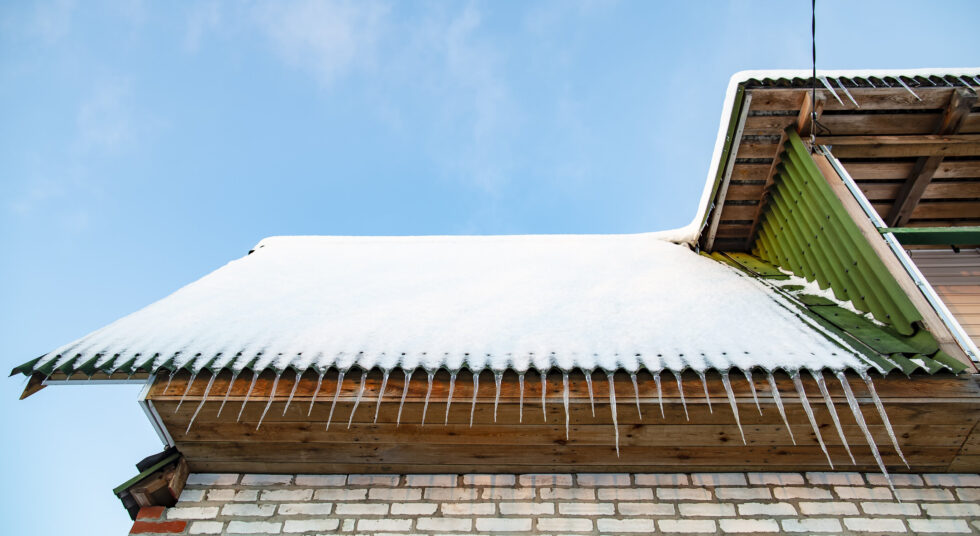
How to De-ice Your Roof
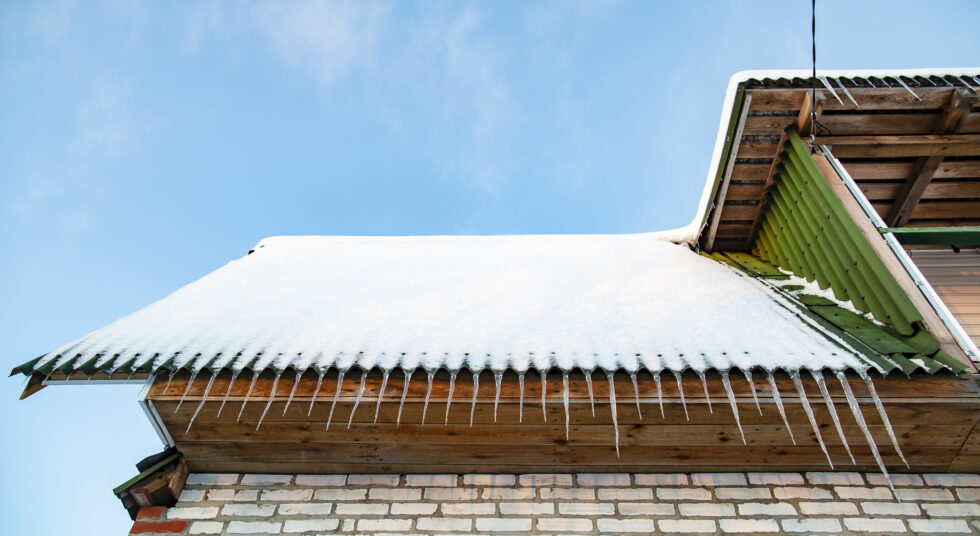
Winter is coming. That means one thing; cold weather and snow are also well on their way. Ice storms or freezing conditions can easily and quickly cause ice buildup on your roof, particularly if it isn’t very well insulated or has poor ventilation. After a cold spell, you may notice ice dams building along the edges of your roof. Typically, the presence of large icicles is a good indicator of an ice dam. Ice dams are thick layers of ice that build up along the eaves and gutters, causing blockages and drainage issues.
While they may look like a beautiful winter wonderland scene, ice dams can cause some serious damage to your roof, such as:
- Leakage
- Damaged Roof Shingles
- Water Stains
- Mold or Fungi Growth
- Serious Structural Damage
To avoid any serious and expensive damage, it’s important to know how to effectively de-ice your roof in winter.
Tips for De-icing Your Roof
Use a Snow Rake or Ice Pick
You can try using a snow rake to scrape off snow buildup in a downward motion, but be very careful when doing so. Avoid standing on ladders or your roof in icy or slippery conditions at all costs. Snow rakes can also potentially cause damage if used incorrectly. If you are uncertain or unsure about how to use one, don’t just wing it, it’s best to contact a professional roofer.
You could also use an icepick to carefully chip away at ice dams until they crack and fall away. Avoid hitting them too hard, you only want to make them break up enough to remove rather than picking so vigorously you damage the roofing below.
Use Warm Water
Beware, this is only a temporary DIY solution best deployed in a pinch or the absence of any other remedy. Simply use a spray bottle or a bucket to apply very warm water to the ice dams to allow them to melt and drain away. Avoid using warm water during or before another freezing spell, as the addition of more water that can freeze will only add to the problem. Ensure there is enough time for the warm water to fully melt and drain the ice and snow away before re-freezing if you are going to use this method.
Use De-icing Chemicals
There are several products available for purchase that de-ice your roof with chemicals. They work very well but can be a bit pricey, particularly if this is a solution you’re using multiple times throughout the season. Typically, liquid de-icers work the best, especially for very thick ice. It’s best to avoid any de-icing product that contains chemicals that can corrode your roofing material, such as sodium chloride or calcium chloride.
Heat Cables
Unfortunately, this method likely won’t help you mid-winter or solve an already present problem, as heat cables need to be installed before freezing temperatures. However, if installed before the winter weather sets in, heat cables are one of the most effective and least time-consuming solutions. These cables are installed in a zig-zag pattern along the roofline near the gutters to create channels for water to drain off and prevent ice build-up. They’ll certainly do their job and keep you from having to regularly apply DIY remedies.
Keeping a close eye on your roof during freezing temperatures should enable you to solve any serious issues as they arise. Make sure to regularly check your roof for leaks or signs of damage that may have been caused by ice build-up. Remember, as with most other roofing solutions, remaining diligent and fixing the small issues as they arise is a much more effective method than ignoring them and then having to pay for costly repairs.
If ice dams are causing a persistent issue for you and you’re tired of trekking up ladders with an icepick every winter, it’s best to call a professional roofer to help you solve your problem.
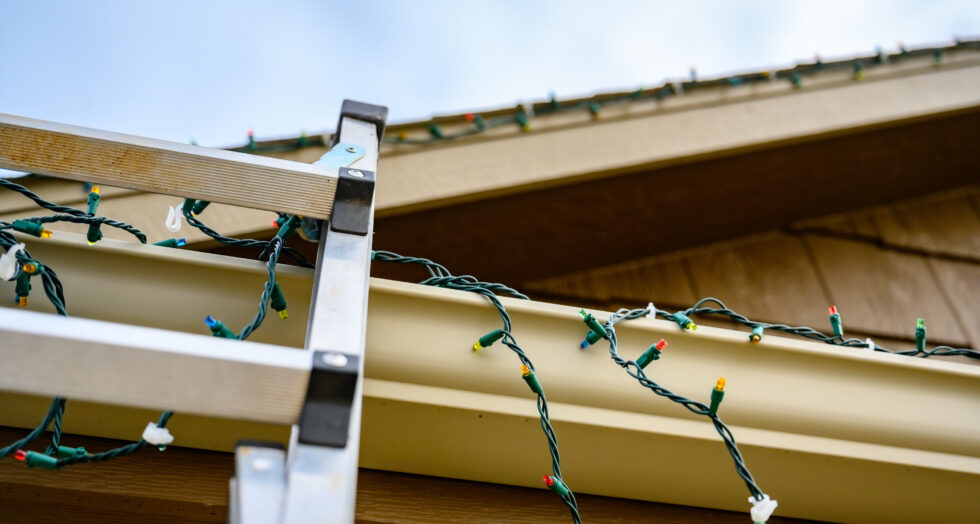
Can I Hang Lights From My Roof for the Holidays?
It’s almost that time of year again. Hanging holiday lights and watching your home glow is one of the greatest pleasures of the season. Almost everyone decorates their houses with magnificent holiday lights these days, with some people boasting impressive displays beyond our wildest imaginations.
However, while it may seem pretty simple to string some fairy lights from your roof, if not done properly, it can cause damage. That’s right, there’s a correct and proper way to hang holiday lights. Here are some tried and tested tips and tricks that will help your home look festive without leading to a leaky roof!
Make A Plan
Plan out exactly where you’re going to hang your lights before you start doing so. It’s important to have an idea in mind rather than just winging it. There might be some areas of your roof that are dangerous or precarious to get to, and those should be avoided. Try taking a photo of your home and using that as a map for where you want to hang your lights. Making a good plan will also prevent too many unnecessary trips up and down the ladder!
Prepare Your Home
Before getting started, you first and foremost need to know exactly what length of string lights you will need. You might require more than you think, as working around corners and windows can be deceptive. Measure the total length of the space you wish to decorate, including the roofline, gutters, windows, and doorframes, before going out to purchase your lights.
Pick The Best Lights
If you’re using old string lights, check them for wear and tear. Don’t use lights with frayed or damaged cords or exposed wires. When purchasing lights, double-check to make sure they’re the color you want. There are different types of white light, with some being significantly brighter than others. LED lights are also the most cost-effective and long-lasting option. Lastly, make sure any lights you purchase are specifically designed for safe outdoor use.
Use the Right Materials
This might go without saying, but don’t use sharp materials such as nails and staples to fix lights on your roof. It’s not a good idea to use anything that can cause damage to your roof or expose it to the elements.
Holes in your roofing, even the tiniest ones caused by a staple gun, can open up the interior of your home to moisture and damage. These are the enemies of a roof, so avoid those sharp objects! These days, it’s easy to find plastic light clips specifically designed for hanging holiday lights. Pick up some of those while you’re at the store, your roof will thank you for it.
Get to Work
For a flawless look, attach your light clips every 6 to 10 inches apart to avoid that sad, sagging look. If you want your light job to look flawless, keep it crisp and clean. Secure the lights firmly and face them all in the same direction. Work neatly around doors and window frames. If you need to attach lights to posts or railing, zip ties are a great, safe option that won’t damage anything.
What NOT To Put On Your Roof
Lights are beautiful and, if installed correctly, safe. However, some people like to go all out for the holidays. We all have that one neighbor who has every type of light and decoration available. While it might look impressive to have a house and yard that looks like it belongs to Santa himself, not all decorations are safe, particularly for the roof of your home.
Steer clear of putting any type of decoration near the chimney. All it takes is one stray ember and you’ll have a house fire on your hands. It’s also ill-advised to cover your roof in those flashy inflatable decorations. Sure, they might look awesome, but consider this. One big gust of wind combined with a poorly fixed inflatable snowman and your roof is going to be suffering from some serious damage! Lastly, avoid covering your roof in heavy decorations. That life-size Rudolph replica might look appealing, but adding lots of heavy decor t your roof, combined with the weight of snow and ice, is a recipe for disaster.